Ringer
What does it look like to build a brand from nothing, inside a startup that's still figuring itself out?
.png)
Joined a team of engineers as the only designer. Built the brand, design system, website, and dashboard from zero, across 3 full website versions and 6+ dashboard flows.
Starting from zero
I joined Ringer as the only designer on a team of engineers. There was no brand. No design system. No website, no dashboard, no visual language of any kind. Just an idea: give any business the power of a full call center, powered by AI, at a fraction of the cost.
My job was to make that idea real, visually, experientially, and credibly. That meant starting at zero and building everything: the logo, the brand identity, the design system, the public-facing website, and the internal dashboard customers would use every day.
An industry that feels like it's not for you
AI telecommunications is a crowded, jargon-heavy space. The established players, enterprise call center software, VoIP providers, phone system vendors, look cold, corporate, and intimidating. Small and mid-sized businesses, the people Ringer is actually built for, look at those products and feel like they're not the intended audience.
Ringer's opportunity was to be the opposite: approachable, modern, and confidence-inspiring for a business owner who has never run a call center but needs the capability of one.
The design had to answer a question before a visitor even read a word: is this for me?
Building an identity from scratch
With no existing identity to work from, I started where every brand decision eventually leads back to: who is this for, and what do they need to feel when they encounter it?
Ringer's customer is a business owner, a restaurant manager, a small agency, a growing e-commerce operation, who is overwhelmed by enterprise software and skeptical of tech promises. They need to feel that Ringer is powerful without being complicated. Professional without being cold.
→ Logo system. Explored dozens of directions, typographic, abstract, icon-based, before landing on the final mark. Presented directions in weekly syncs with the CEO and development team, pressure-testing against the product vision until we converged.
→ Type system. Geometric sans for UI clarity, humanist weight for marketing warmth.
→ Color system. Deep blue primary anchoring trust and tech, without the coldness of enterprise software.
→ Component library. Documented buttons, form elements, and UI patterns for engineering handoff. Consistency was a product quality issue, not just an aesthetic one.
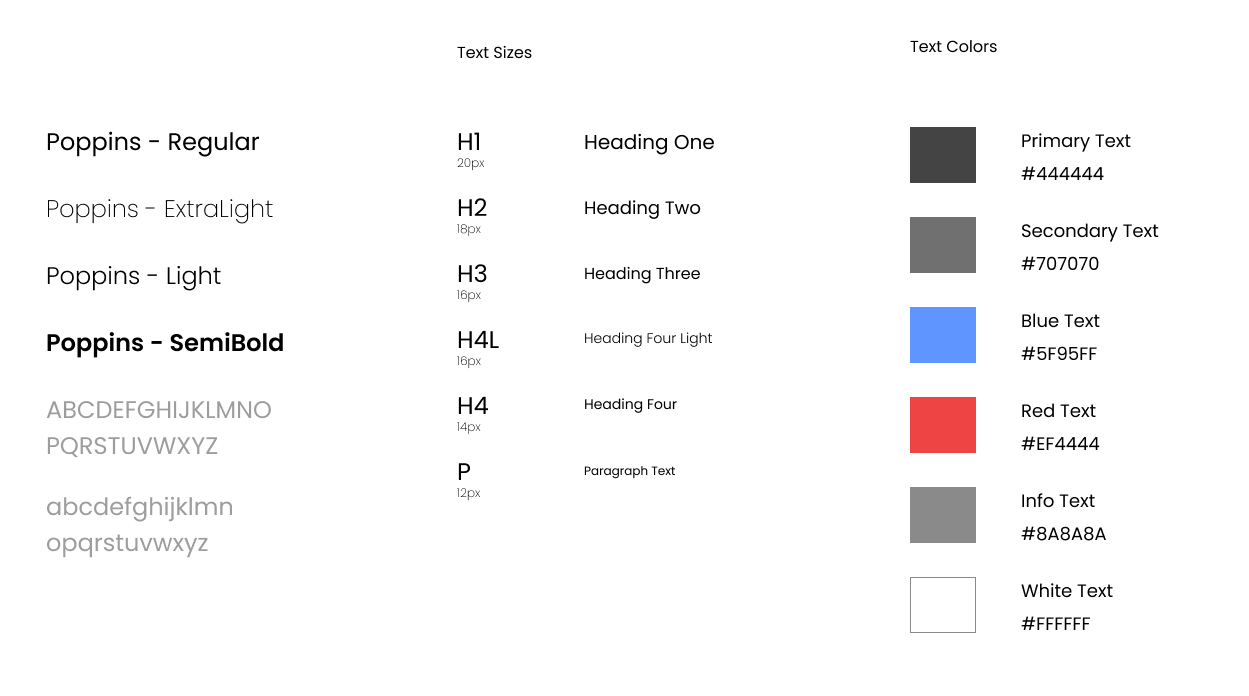

Top: Design system, typography · Bottom: Logo exploration and final mark
Three versions, one evolving product
The website had one job: turn a skeptical business owner into a curious prospect. I designed and iterated through three complete versions as the product evolved.
V1 — Foundation
Established the core structure and visual language, hero, value props, how it works, social proof, CTA. Clean, fast, direct.
V2 — Pivot
Came after a product pivot that reframed the target user. The messaging shifted, the feature emphasis changed, and the visual hierarchy needed to reflect a different entry point. I rebuilt the hero and restructured the page flow to match.
V3 — Partnerships
Integrated new partnership information and refined the social proof section as Ringer established relationships with key technology partners including ElevenLabs, Vocode, and others in the AI voice stack.
Each version taught me something about what the product actually was, which is the reality of designing inside a startup. The design doesn't just reflect the product; it helps the team figure out what the product is.
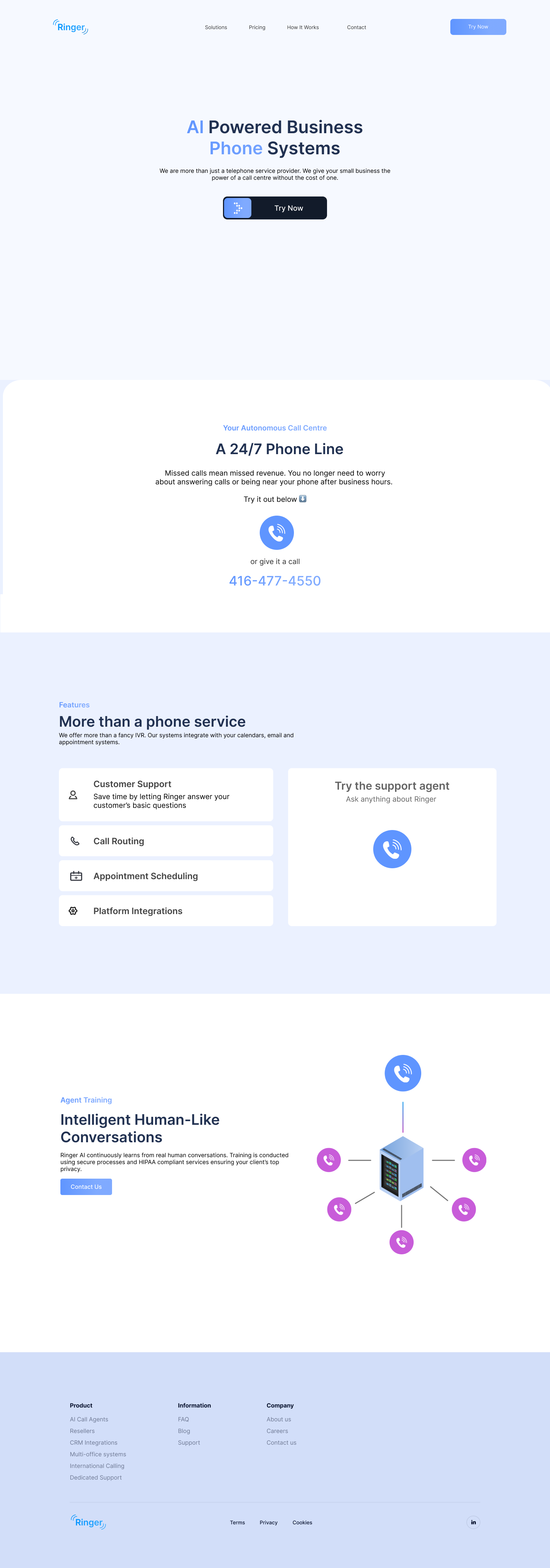
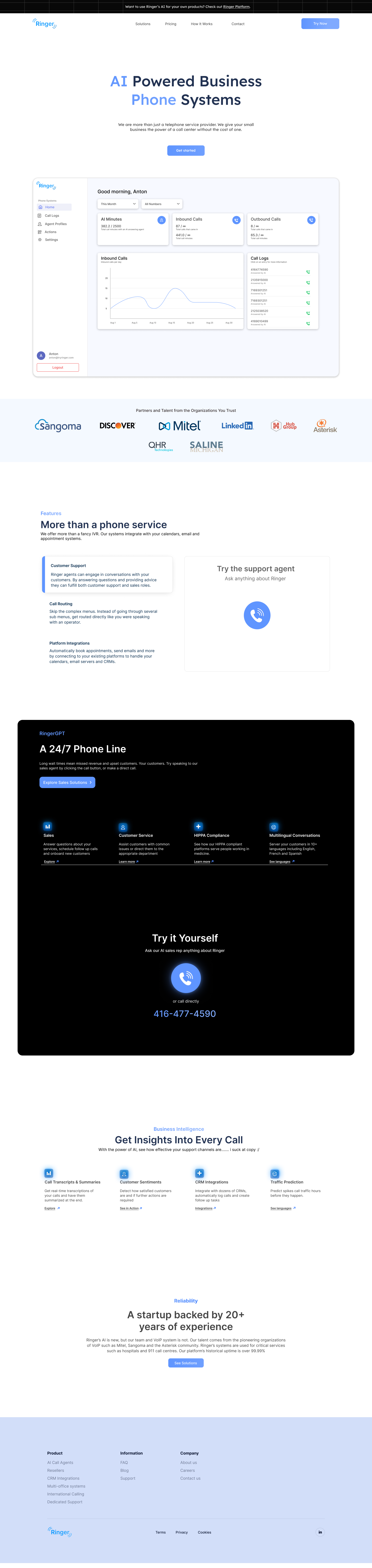
Left: V1 homepage · Right: V2 homepage, redesigned after product pivot

V3 homepage, integrated partnerships and refined positioning
Dashboard & Product
Designed end-to-end: signup flow, agent training, phone status management, actions, voice configuration, and mobile, across both desktop and mobile platforms.

Dashboard design, multiple flows across desktop and mobile